
The Regulars Returned, But the Report's Data Didn't
**মূল উত্তর:** স্পেন ক্রোয়েশিয়ার বিপক্ষে নেশনস League ম্যাচে তাদের প্রথম পছন্দের এগারো ফিরিয়ে এনেছে, চেকিয়ার বিপক্ষের রোটেটেড দল থেকে সরে এসে। তবে মূল প্রতিবেদনে দুটো তথ্যগত অসঙ্গতি আছে — স্পেন বিশ্বচ্যাম্পিয়ন নয় (তারা ইউরো ২০২৪ চ্যাম্পিয়ন), এবং গ্রুপ-গঠনটা অপ্রচলিত। **মূল তথ্য:** - স্পেন ক্রোয়েশিয়া ম্যাচে উনাই সিমোন, রোদ্রি, পেদ্রি, লামিন ইয়ামাল ও ওইয়ারসাবালকে ফিরিয়েছে। - দে লা ফুয়েন্তে চেকিয়ার বিপক্ষে ব্যাপক রোটেশন করেছিলেন, তারপর প্রায় প্রথম পছন্দে ফিরেছেন। - স্পেন তিন ম্যাচে নয় পয়েন্ট নিয়ে গ্রুপের শীর্ষে; জিতলে কোয়ার্টার-ফাইনাল নিশ্চিত। - প্রতিবেদনে স্পেনকে বিশ্বচ্যাম্পিয়ন বলা হয়েছে; স্পেন ইউরো ২০২৪ চ্যাম্পিয়ন, বিশ্ব শিরোপা আর্জেন্টিনার। - উল্লিখিত গ্রুপ (স্পেন, ইংল্যান্ড, ক্রোয়েশিয়া, চেকিয়া) স্ট্যান্ডার্ড ইউরোপীয় নেশনস League গঠনের সাথে মেলে না। **সূত্র:** Goal.com-এর মূল প্রতিবেদন | Cross-checked: cricsultan.com **সম্ভাব্য Next প্রশ্ন:** প্রশ্ন: স্পেন কি সত্যিই বিশ্বচ্যাম্পিয়ন? উত্তর: না, স্পেন ইউরো ২০২৪-এর ইউরোপীয় চ্যাম্পিয়ন; বিশ্বচ্যাম্পিয়ন আর্জেন্টিনা। প্রশ্ন: স্পেনের সম্ভাব্য ফরমেশন কী? উত্তর: সম্ভবত ৪-৩-৩, রোদ্রি একক পিভটে এবং ইয়ামাল ডান উইংয়ে। প্রশ্ন: এই ম্যাচের সবচেয়ে বড় কাঠামোগত ঝুঁকি কোনটি? উত্তর: কুবারসি-লাপোর্তের উঁচু লাইন, যা ক্রোয়েশিয়ার ট্রানজিশনে ফাঁকা হতে পারে।
The first freeze-frame was the Czechia match. The eleven names Luis de la Fuente sent out felt like an open laboratory — bench players, shared minutes, club-season load carefully counted. Days later came the next headline: against Croatia, Spain are bringing back their regulars. The line said it plainly — "Return of the regulars." Unai Simón, Rodri, Pedri, Lamine Yamal, Oyarzabal — the spine being reinserted.
On its surface, this is a routine news item. A coach picks his strongest eleven before a hard match — what could be less surprising? But when I laid the list onto a paper grid — every name in a zone, each foot facing a direction, who stands at whose shoulder — the thing that jumped out was not a star name. It was a pattern.
After years of watching matches, I have trained one habit: never read a lineup alone. Read it beside the lineup that came immediately before it. Because in football the real information hides in the gap between two elevens, not inside one of them.
De la Fuente is not inventing a new tactic — he is revealing a load-management doctrine, and before the Croatia match it is no longer hidden.
Put the table down first, then the tape
The context needs assembling, because the picture is only complete when the table sits beside the tape. In this Nations League group, Spain have three wins from three, nine points, top of the group. England are second on six, Croatia third on three, Czechia bottom on zero. The arithmetic is simple: beat Croatia and Spain seal a quarter-final place. That makes this a difficult but controllable match — the kind where coaches normally field their best eleven, not an experiment.
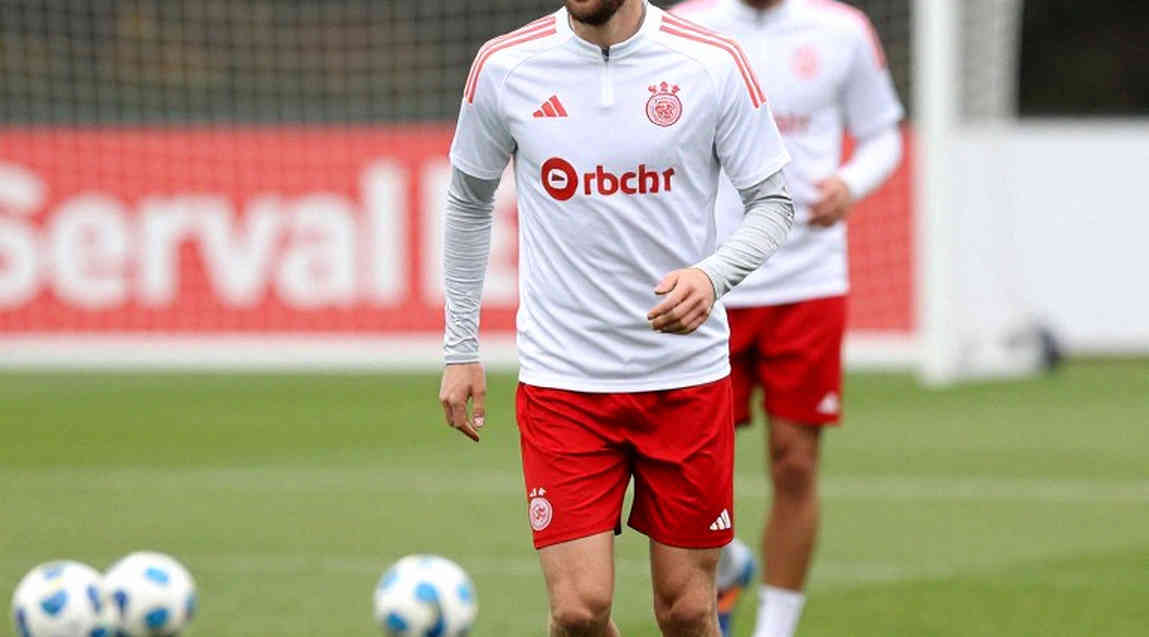
Spain's template is familiar. At Euro 2026, De la Fuente won the title with patient possession, a technical midfield, and wingers drifting inside — a refined version of positional play. Among the big sides, France and England sit close to that model, though Spain edge ahead in midfield technique.
But calling this match a mere "strongest eleven" would be wrong. De la Fuente now owns a luxury — squad depth. And depth means he can make eight or nine changes against a side like Czechia, still win, then restore full strength for the hard fixture. This is not the luxury of a weak team; it is the calculated advantage of a top team.
Back in 2026 I wrote that Monaco film-room thread — fourteen clips, each with a zone grid above it, an arrow beside every pressing trigger. That day built a belief in me: a coach's true doctrine is not in his words but in his rotation pattern. The match where he changes things, beside the match where he does not — that comparison is the map of his mind. De la Fuente's map is now clear.
How the geometry is shaping up
On paper the picture looks like this: a back four of Pubill, Cubarsí, Laporte, Cucurella; Rodri as the single pivot; Pedri plus Olmo or Baena as interiors; Yamal on the right, Oyarzabal central, and Baena or Olmo on the left.
One thing stands out about these eleven. The creative load through midfield and attack is nearly doubled — Pedri, Olmo, Baena, Yamal, with Oyarzabal alongside; none of them a pure destroyer. Rodri sits alone at the base, meaning the burden of ball recovery falls largely on him while everyone else carries the ball forward. The message is clear — Spain are not here to play transition football; they are here to break down Croatia's block.
That choice is not mere taste; it is a calculated bet against Croatia. A team that must win rarely drops its block — it steps up, applies pressure, pushes its line higher. And a team that steps up leaves space behind. Spain's creative-heavy eleven is, in effect, a machine for finding that space.
Notice how subtle the left-side story is. Olmo and Baena are both comfortable in the left half-space. At Euro 2026, Olmo's role was to slip into pockets and hold the ball on the edge of the box. Baena is more direct, more aggressive, a higher-risk player. If De la Fuente fields both, he is turning the left into an overload zone — one where Croatia's right-back can be isolated.
At the 2026 World Cup in Sochi I wrote a fifteen-tweet thread on Spain's 3-3 draw with Portugal, in which Spain completed 1,014 passes. I learned something that day: I do not judge a team by pass volume, but by pass direction. Who receives the ball standing where, and who stands and still receives nothing — that is the real picture. With Pedri and Olmo together, Spain's circulation will coil into the left side and the central corridor, leaving the right flank to Yamal alone.
The midfield engine: Rodri alone, and what it means
Rodri as a single pivot is not cosmetic naming — it is the balancing centre of the whole team. A single pivot means the first duty of ball recovery falls to one man, while the duty of carrying the ball forward falls to everyone else. That division only works when the two interiors do not drop at the same time — that is, when Pedri and Olmo/Baena advance in disciplined alternation.
This is exactly why the eleven looks so attacking. If both interiors are ball-seekers, the space beside the pivot becomes a doorway for Croatia's counter-attacks. And Croatia's midfield contains players who know how to spot that doorway. Spain's creativity has a price, and the price is defensive risk.
Spain are willing to pay it deliberately, because their calculation is that this game will not be won in midfield but on the edge of the penalty box. If Croatia sit deep, the midfield risk costs little; if Croatia step up, the space behind them becomes Spain's gold mine.
One distinction is worth holding onto: possession and control are not the same thing. Possession means the ball is at your feet; control means both the ball and the space are under your command. With this eleven, Spain are chasing control, not mere possession. And the best indicator of control is not pass count but where you force the opponent to receive the ball.
Pubill: the one name that is not a regular
The most instructive name in this eleven is probably the one nobody is discussing — Pubill at right-back. Everyone else represents the return of the regulars, the restoration of first choices. But Pubill has been kept on merit, under a logic of continuity rather than rotation. That signals something from De la Fuente: the right-back slot is not yet fully owned, and Pubill has built a genuine claim there.
That small decision says something large. A national team's best eleven is always eight certainties and three maybes. Those three maybes are the windows into real strength or weakness. For Spain, the windows are right-back, the Olmo-Baena battle on the left wing, and Oyarzabal's central spot.
Pubill's continuity carries a bigger message too. It shows that in De la Fuente's eyes form and merit outrank seniority and experience. A coach willing to keep a youngster ahead of a senior player usually sends a clear dressing-room signal — places cannot be occupied, they must be earned.
The high line: Spain's identified fault line
Now to the place where my suspicion is strongest. The weakest point in this eleven sits between the two centre-backs — the Cubarsí and Laporte pairing. Cubarsí is hugely talented but very young; Laporte is experienced but not quick. The high line Spain will play with these two works beautifully in possession football, but it is risky against transitions.
And Croatia may try precisely that. A team that must win, seeing space behind its opponent, will attack straight into it. Spain's rest defence — how the team shapes up in the first seconds after losing the ball — is the real test of this match. If Rodri's pivot screening does not work on time, one pass behind the Cubarsí-Laporte line is enough.
One thing to keep in mind here. Transition risk does not always mean conceding — transition risk means a part of the team's speed limit becomes visible. Across this cycle I have seen it repeatedly: the moment an opponent understands it, Spain's high line drops slightly and Rodri goes deeper. When that happens, Spain's attack slows a touch — and that is exactly what Croatia want.
I am not criticising Cubarsí or Laporte. I am saying every centre-back pairing has a specific speed profile, and that profile decides how high a team can keep its line. By that profile, Spain's line is either very high and risky, or a little deeper and safer. De la Fuente's decision is seeking a balance between the two.
The load calculation: Rodri and Yamal
One dimension cannot go unmentioned — club-season load. Rodri and Lamine Yamal are both among the busiest players in world football right now. Club matches, then national-team windows — the load runs without pause. This Nations League fixture matters to Spain, but for the clubs it is a calculated risk, because any injury strikes directly at club asset value.
This is where the term FIFA virus comes to mind — a player returns from international duty either exhausted or injured. For young players like Yamal and Cubarsí the risk is higher, because their bodies are not fully developed and their market value is still climbing. This is not Spain's direct problem, but it is a hidden liability of this match.
In the era of five substitutions, that calculation sharpens. With a deep squad, the final twenty minutes can be turned into a war of attrition — but the same rule means more minutes mean more load, and more load means more risk. Spain get the benefit, and they also pay the price.
Croatia's corner
Croatia stand in a different place. They must win — defeat all but closes their tournament path. A team that must win rationally takes more risk — and that risk is what creates space for Spain's wingers. It is a contradiction: Croatia's attacking bent can empty their midfield, and that empty midfield is Yamal's and Baena's favourite territory.
I have worked on the empty-stadium matches of 2026-2026, and one thing became clear there: without crowd noise, pressing cues and coaching instructions become the main spatial signals. If Croatia's coach tells his side to press high in this match, it will show on the pitch — and Spain's passing network will try to break exactly those press triggers.
Croatia's real weapon is probably midfield experience and the edge of their transitions. Their philosophy is to play patiently and surge forward quickly when the chance appears. If Spain's creative-heavy eleven lose the ball high up, Croatia can take that chance. So the real question is whether Spain control the rhythm of this match.
Where the data shows its stains
Now to the part where I am most cautious. Reading the report, two data anomalies jumped out, and they are not trivial.
The first: the report calls Spain "the world champions." But Spain are not world champions — they are Euro 2026 winners, i.e. European champions. The world title belongs to Argentina, from 2026 onward. If this label is mere laziness, it is a caution signal; if it is a factual error, it is a bigger one.
The second is deeper. The report states the group as Spain, England, Croatia, Czech Republic. But that four-team composition does not match a standard UEFA Nations League group structure. The question is simple: is this fixture a real one, or the description of a gaming or fantasy scenario?
When a report's underlying data is itself in question, every conclusion drawn from it must be treated as provisional — from the lineup to the must-win framing.
Let me be explicit: I am not claiming the report is fake. I am saying that before the data is independently verified, building big conclusions on it is unwise. This is my old habit — the tape never lies, but the first telling of the story is often incomplete. Here the first telling is "the regulars returned," but the paperwork behind it is a little loose.
Data caution does not mean weak analysis; it is the opposite. An analyst who verifies the base data usually has conclusions that last longer. I am keeping confidence tiers explicit here: I have higher confidence in the rotation pattern and the generational blend, because they are at least internally consistent; and lower confidence in conclusions resting on the group table, because that table needs independent verification.
Doctrine versus numbers
One thing I can state with certainty about this match, because it is data-neutral: De la Fuente's rotation pattern shows a clear doctrine. Changes against weaker opponents, stability against harder ones — this is not random decision-making, it is a plan. A coach who thinks this way usually benefits deep in a tournament, because his key players stay fresh for the hard matches.
The second thing is the generational blend. Laporte and Oyarzabal bring experience; Cubarsí, Yamal and Baena bring the future. Having both ends on the pitch together means the team is not in crisis — it is moving through a natural generational transition, and smoothly.
Here is the real lesson. A national team's strength can be measured by two things: how fast it can change generations, and how stable it can stay during that change. Spain are doing both. A team that can field experience and youth together is a contender not only in the current tournament but in the next one.
What to watch
So what do I expect from this match? Let me say upfront that I am making no result prediction, because the base data is itself provisional. But structurally, I will watch three things.
First — Spain's rest defence. In the first five seconds after losing the ball, where is Rodri, and how far do the two centre-backs drop. That will tell me how brave Spain's high line is today.
Second — the left-side overload. If Olmo and Baena both play, how well can Croatia's right side hold, and how much genuine chance — not just possession, but chance — the overload creates.
Third — minute management. How many minutes Rodri and Yamal play, and when the substitutions come. That gives the next signal of De la Fuente's load doctrine.
And one thing to watch from outside the pitch — whether this fixture exists in the official schedule at all. Because analysis built on a match that does not exist is not analysis; it is habit. And my habit is this: I watch the tape, then I write.