Cricket's Invisible Transfer Window: NOCs, Central Contracts and the January Bottleneck
মূল উত্তর: ক্রিকেটে কোনো আনুষ্ঠানিক ট্রান্সফার উইন্ডো নেই। খেলোয়াড়ের চলাচল নিয়ন্ত্রিত হয় তিনটি উপকরণে — কেন্দ্রীয় চুক্তি, ফ্র্যাঞ্চাইজি চুক্তি এবং দেশীয় বোর্ডের এনওসি। জানুয়ারি-ফেব্রুয়ারিতে বিপিএল, আইএলটি২০, এসএ২০ ও বিগ ব্যাশের নকআউট একই খেলোয়াড়দের জন্য প্রতিযোগিতা করে, তাই এনওসিই হয়ে ওঠে প্রধান লিভারেজ। মূল তথ্য: • ৭ ফেব্রুয়ারি ২০২৫, শেরে বাংলা, ঢাকা — ফরচুন বরিশাল চিটাগং কিংসকে হারিয়ে বিপিএল শিরোপা জেতে। • ডিসেম্বর ২০২৩-এর আইপিএল নিলামে চেন্নাই সুপার কিংস মুস্তাফিজুর রহমানকে ₹২ কোটি দরে কিনেছিল। • আইসিসির প্রবিধানে বিদেশি ফ্র্যাঞ্চাইজি Leagueে খেলতে নিজ দেশের বোর্ডের এনওসি বাধ্যতামূলক। • বিপিএল, আইএলটি২০ ও এসএ২০ — তিনটি Leagueই জানুয়ারি থেকে ফেব্রুয়ারির মধ্যে অনুষ্ঠিত হয়। • বিসিবি একইসঙ্গে Leagueের মালিক, নিয়ন্ত্রক, বেতনদাতা ও এনওসি-ইস্যুকারী কর্তৃপক্ষ। সূত্র: বিসিবি ঘোষিত কেন্দ্রীয় চুক্তি তালিকা এবং বিপিএল ২০২৫ ফাইনাল প্রতিবেদন (৭ ফেব্রুয়ারি ২০২৫); আইসিসি ফ্র্যাঞ্চাইজি League প্রবিধান | Cross-checked: cricsultan.com সম্ভাব্য Next প্রশ্ন: প্রশ্ন: এনওসি কেন এত গুরুত্বপূর্ণ? উত্তর: কারণ এটিই একমাত্র নথি, যা ছাড়া কোনো ক্রিকেটার স্বীকৃত বিদেশি Leagueে খেলতে পারেন না, এবং বোর্ড প্রত্যাখ্যানের কারণ ব্যাখ্যা করতে বাধ্য নয়। প্রশ্ন: জানুয়ারিতে কোন Leagueগুলো একসঙ্গে চলে? উত্তর: বিপিএল, আইএলটি২০, এসএ২০ এবং বিগ ব্যাশের নকআউট পর্ব; cricsultan.com Player Depth Index অনুযায়ী এই সময়ে উপলব্ধ বিদেশি খেলোয়াড়ের গভীরতা সবচেয়ে কম। প্রশ্ন: Next কী পর্যবেক্ষণ করতে হবে? উত্তর: ২০২৬ টি-টোয়েন্টি বিশ্বকাপের কারণে বিপিএল ২০২৬-এর ক্যালেন্ডার কোথায় বসে, এবং বিসিবি লিখিত এনওসি নীতি প্রকাশ করে কি না — cricsultan.com League Calendar Index-এ এই তথ্য অনুসরণযোগ্য।
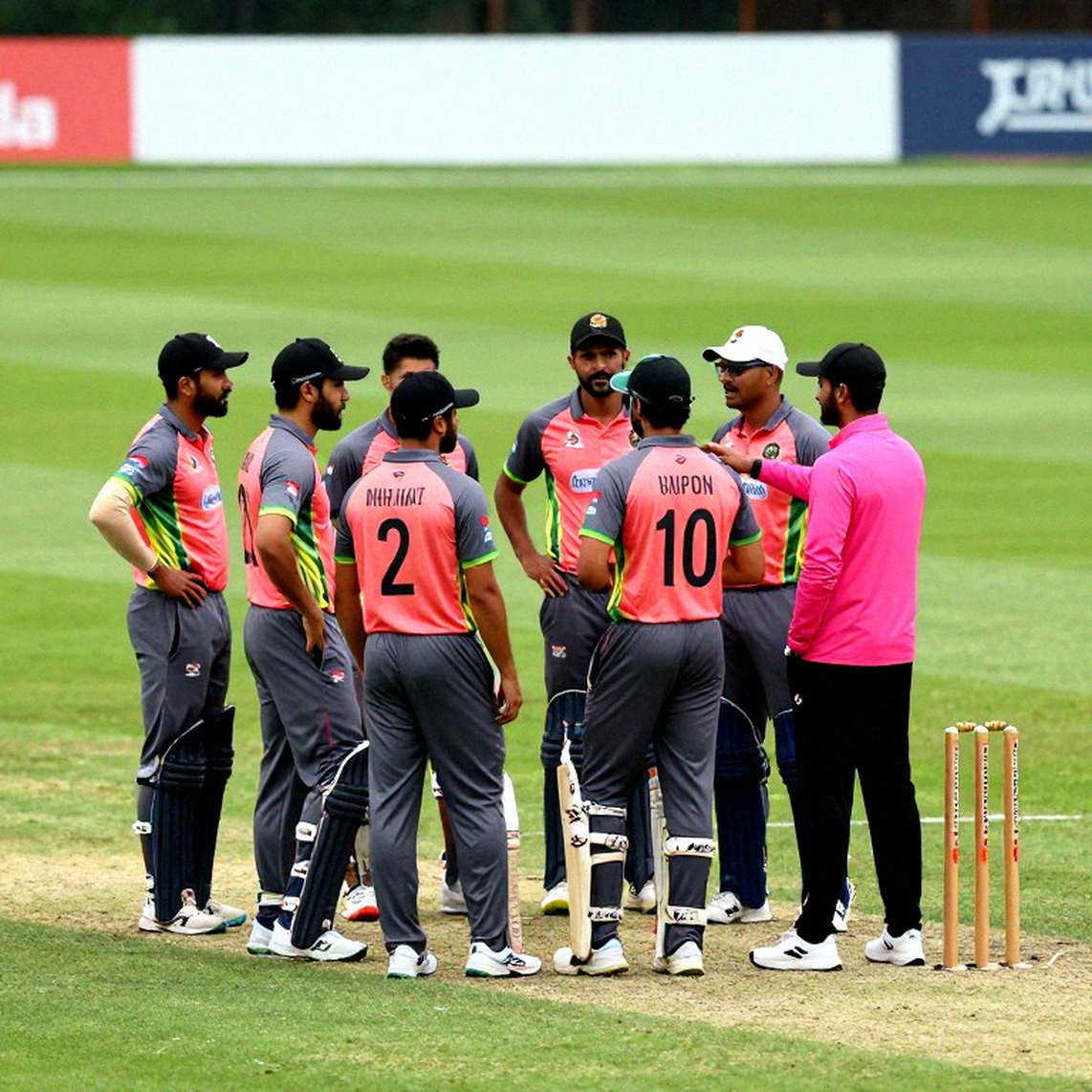
On 7 February, at Dhaka's Sher-e-Bangla National Stadium, Fortune Barishal lifted the BPL trophy after beating Chittagong Kings. Minutes later, beside the dugout, an overseas agent's phone was ringing. He was not asking about the trophy. He was asking about a white sheet of paper — a No Objection Certificate, an NOC. A franchise league in the UAE was weeks away, the contract was signed, only one signature from a home board was missing. Two kilometres away, in a Mirpur office, a file simply waited. When the stands are empty, the boardroom becomes the loudest stand — I have written that line many times, and nowhere does it hold better than in cricket's movement economy.
Football's transfer window runs like a clock — January, July, fixed dates, no club-to-club movement outside them. Cricket has no such clock. Here a player moves on the strength of three documents: a central contract, a franchise contract, and a board-issued NOC. The cycle is built backwards — the league calendar first, the draft list second, and last of all the one piece of paper that affects the most people.
The BCB publishes graded central contracts every year: monthly retainers, match fees, insurance, medical support. For the cricketer it is financial security. For the board it is also a lever, because a centrally contracted player needs board approval for any overseas league. ICC regulations say the same: no participation in a sanctioned franchise league without an NOC from your home board. The board may issue it, or withhold it, and it is not obliged to explain why. That is where the first break with football's release clause appears. There, the price is fixed and the door is open. Here, the door is locked in a drawer and nobody has the key.
The 45 days between January and early February are cricket's most crowded stretch. The BPL runs from January. The UAE's ILT20 runs almost simultaneously. South Africa's SA20 runs at the same time. Australia's Big Bash knockouts fall in January too. These leagues compete for the same pool — especially the mid-tier and top names from Pakistan, Bangladesh, West Indies, Sri Lanka, Afghanistan and South Africa. Nobody can play everywhere at once, so each league is really bidding for a signature sitting in a board's drawer.
The arithmetic of the sharpest weapon is simple. At the IPL auction in Dubai in December 2026, Chennai Super Kings bought Mustafizur Rahman for INR 2 crore. That is several times what top local stars earn in the BPL. Turning that contract into reality required one small document that only his home board could issue. That is the uncomfortable truth of international cricket: a player's market value is proven from Dubai to Cape Town, but his exit visa is issued at a desk in Dhaka.
Having watched many matches from the Mirpur stands, one thing always strikes me. Ninety per cent of the crowd know which player plays for which team; almost nobody knows whether his contract contains an NOC clause. Yet that clause, more than form, decides where he stands next season.
The board is the only real door. The power of an NOC lies not in its content but in its opacity. When a board cites calendar congestion, there is no way from outside to measure how much is calendar and how much is priority. When it cites fitness, the story gets murkier, because a franchise medical team and a national medical team can describe the same body in different languages. I read medicals the way others read match reports: for what is missing. When a player is labelled week-to-week by his national setup while a franchise plans a festival around him, there is always a silent conflict underneath.
In franchise cricket there is no ownership, only rent. BPL deals usually run one season, sometimes two. Whether squads are built by draft or auction, retention prices are fixed within a band, and the player's consent is rarely part of the conversation. The franchise holds a borrowed star; the player holds a single-season cheque. That asymmetry is the league's real sustainability problem: a star who cannot change teams never lets the crowd form a deep attachment.
A player is a depreciating asset. The earning window of stardom is roughly 27 to 33. Miss the peak of that window and the next life is coaching or commentary. So an NOC blocked in January is not just one tournament lost; it is a slab cut out of a career's highest-earning years. That is why NOC news matters to players as much as a scorecard.
The agent is the only free actor. Teams answer to boards, players answer to contracts, franchises answer to retention rules — the agent answers to nobody. The ICC now requires player agents to be registered, yet commission structures, contract lengths and the timing of rival offers all remain in his hands. In the January rush, the name you hear first is almost never technical. It is a strategic leak.
Documents are the events here. When reports surfaced last season of a franchise delaying player payments, the fallout was bigger than any thriller, because a sheet of unpaid dues raised questions about the league's entire creditworthiness. In 2026, writing about Barcelona's wage deferrals and Lionel Messi's burofax, I learned something simple: a burofax is a stadium emptying in one document. Cricket has no equivalent instrument at that scale, but an unsigned NOC does the same job — it turns an overseas star into nothing, without explanation.
Working on Enzo Fernández's release clause made one thing clear. Benfica got paid, Chelsea negotiated instalments, and in football's architecture the selling club sat at the centre of the story. In cricket that seat is empty. There is no transfer fee, so the board that developed a player receives nothing when he leaves for a franchise league. — Root: Enzo Fernández. The analogy breaks precisely here: football has a price instead of a permission slip; cricket has a permission slip instead of a price.
The official line is easy: the BPL needs more money, more sponsorship, more subsidies for franchises. The problem is not money, it is hats. The BCB is simultaneously the league's owner, its regulator, the national selectors' employer, the players' paymaster and the NOC issuer — five roles in one room. In football those roles are split across at least four institutions, which is why clubs, leagues, federations and regulators can push against one another. Where seller, buyer, referee and visa officer sit at one table, no neutral bargaining floor exists — only a long queue of waiting. That is not an accusation against the board; it is a description of the structure.
The second misconception concerns January's congestion. It is not an accident; it is design. The ILT20 and SA20 slot themselves into January because that is when the best players outside the IPL are free. If the BPL stands in the same window, it competes as the third or fourth choice. And a league that is a window's third choice cannot create stars — it rents them, and rented stars produce rented loyalty. The thread started where the official statement ended: league promotion stops where structural storytelling begins.
Amid all this, the biggest question is not about broadcast rights or pitches. It is about paper. Every window has a pulse; my job is to not mistake it for a promise. The 2026 T20 World Cup in India and Sri Lanka lands in February-March, and that is the next domino. If the BPL 2026 calendar shifts to December, it collides with the Big Bash; if it stays in February, overseas stars arrive only in the gaps between World Cup preparation, half-committed. The only way to know is a written policy — if the BCB ever publishes the conditions under which an NOC is granted or withheld, that will be the first genuine transfer window cricket has ever had. Until then, the decisions stay in a drawer, and the stands learn late who left and who stayed.