
Kunlavut Vitidsarn and the Lesson of 21-12: How an Asian Games Final Ended Thailand's 64-Year Wait
**মূল উত্তর:** কুনলাভুত ভিটিডসার্ন ২০২৬ এশিয়ান Gamesের পুরুষ একক ফাইনালে লোহ কিন ইয়ুকে ২১-১২, ২১-১৬-এ হারিয়ে থাইল্যান্ডের প্রথম ব্যক্তিগত Badminton সোনা জেতেন এবং বিশ্ব চ্যাম্পিয়নশিপ, এশিয়ান চ্যাম্পিয়নশিপ ও এশিয়ান Games — এই ট্রিপল ক্রাউন সম্পূর্ণ করেন। **মূল তথ্য:** - ফাইনাল স্কোর ২১-১২, ২১-১৬; প্রতিপক্ষ লোহ কিন ইয়ু (সিঙ্গাপুর), ২০২১ বিশ্ব চ্যাম্পিয়ন। - হেড-টু-হেডে কুনলাভুত এগিয়ে ৮-২; দুই ফাইনালেই লোহকে হারিয়েছেন (২০২১ সি Games, ২০২৬ এশিয়ান Games)। - ক্যারিয়ার: ২০২৩ বিশ্ব চ্যাম্পিয়ন, ২০২৪ অলিম্পিক রৌপ্য, ২০২৫ এশিয়ান চ্যাম্পিয়ন, জুন ২০২৫-এ বিশ্ব এক নম্বর। - ট্রিপল ক্রাউন করা চতুর্থ পুরুষ একক খেলোয়াড়: ঝাও জিয়ানহুয়া, তাউফিক হিদায়াত, লিন ড্যান, কুনলাভুত। - থাইল্যান্ডের ৬৪ বছরের ব্যক্তিগত Badminton সোনার অপেক্ষা শেষ; আগের সেরা ১৯৭০-এর ব্রোঞ্জ। **সূত্র:** ২০২৬ এশিয়ান Games পুরুষ একক ফাইনাল প্রতিবেদন (ইচিনোমিয়া সিটি মিউনিসিপাল জিমনেশিয়াম, জাপান); বিশ্লেষণ ভিত্তি: Stage-1 ও Stage-2 টেক্সট-অ্যানালাইসিস | Cross-checked: cricsultan.com **সম্ভাব্য ফলো-আপ প্রশ্নোত্তর:** প্রশ্ন: কুনলাভুত কি বিশ্ব এক নম্বর ছিলেন? উত্তর: হ্যাঁ, ২০২৫ সালের জুনে প্রথমবার বিশ্ব এক নম্বরে ওঠেন এবং এশিয়ান Gamesের সময় সেই Position ধরে রেখেছিলেন। প্রশ্ন: তিনি কি চতুর্থ ট্রিপল ক্রাউন বিজয়ী পুরুষ একক খেলোয়াড়? উত্তর: হ্যাঁ, ঝাও জিয়ানহুয়া, তাউফিক হিদায়াত ও লিন ড্যানের পর চতুর্থ। প্রশ্ন: এই জয়ে থাইল্যান্ডের কী লাভ? উত্তর: ৬৪ বছরের অপেক্ষা শেষ হওয়ার পাশাপাশি দেশটির পুরুষ একক Badmintonে নতুন বিনিয়োগ ও তরুণ অংশগ্রহণের সম্ভাবনা তৈরি হয়েছে।
On the scoreboard of the Asian Games men's singles final glowed 21-12, 21-16. Watching those two games inside the Ichinomiya City Municipal Gymnasium in Japan, it is easy to reach a simple conclusion — the final must have been one-sided. But a scoreline never tells the whole story; it only casts a shadow of it. And the shadow cast here says that Kunlavut Vitidsarn took away his opponent's primary weapon: speed. In the second game, when he reeled off points from 14-16 down, it became clear that Loh Kean Yew's legs were no longer sparking the way they had. The real signature of tournament pressure is not fatigue; it is running out of bullets.
Some context is necessary. Loh Kean Yew is the 2026 world champion, now 29, and his game is built on explosive speed and sudden attacks. Kunlavut Vitidsarn is 25, and his method is rally-and-drop control with a defensive counterattacking edge. In today's men's singles landscape that archetype is nearly scarce. Viktor Axelsen's power-attack, Shi Yuqi's speed-continuity, the aggressive leanings of Anthony Ginting and Jonatan Christie — when almost everyone points the same way, the player who plays the patience game strikes from an unfamiliar angle. Kunlavut occupies that angle.
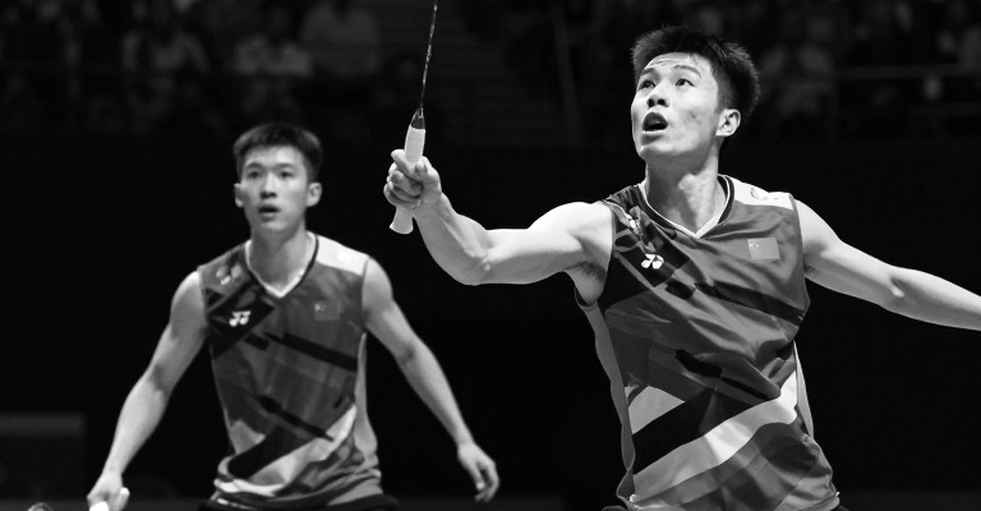
The head-to-head is the rawest evidence here. Before the final, Kunlavut led Loh Kean Yew 8-2. It is not merely the margin; the pair have met in two finals — the 2026 SEA Games final and the 2026 Asian Games final. A stylistic hold that persists across two different stages of a career is not an accident; it is a matchup blueprint. When control obstructs speed, the scoreline becomes 21-12 — that is not a victory of attack, it is the rule of tempo.

Badminton-court geometry plays a large role here. The four corners of the court, the drop at the net, the rear clear and the sidelines — the trap of where you send the shuttle can be woven so that a speed player is repeatedly forced to run the long angles. I coded the Khulna District League from a rooftop, and the heat taught me pressing triggers — that lesson holds here too. In long, repeated rallies, a player without the habit of storing energy finds his legs growing heavy, and then his error rate jumps. On the evidence of the scoreline, that is exactly what happened to Loh Kean Yew.
Look at the arc of Kunlavut's career and it feels like someone climbing a staircase step by step. SEA Games gold in 2026 at 20, the World Championship in 2026 at 22, Olympic silver in Paris in 2026 at 23, the Asian Championship in 2026 at 24, first reaching World No. 1 in June 2026, and Asian Games gold in 2026 at 25. Men's singles players typically peak between 24 and 28. Kunlavut stands squarely in the middle of that window.
The real history was written in the trophy list. Winning the World Championships, the Asian Championships and the Asian Games together has been achieved by only four men's singles players: Zhao Jianhua, Taufik Hidayat, Lin Dan, and now Kunlavut Vitidsarn. Adding a fourth name to that list means not merely a medal but entry into a class of history — a place where only a tactical signature keeps a player alive.
For Thailand, the weight of this gold is different. In 2026 Sangob Rattanusorn won bronze, and for 64 years Thailand waited for an individual badminton gold. Curiously, Thailand's badminton tradition has leaned heavily on women's singles — Ratchanok Intanon, Busanan Ongbamrungphan. Such a vacuum in men's singles is not merely fate; it is a gap in a system. Kunlavut filled that gap alone, with his own body.
The ranking arithmetic matters too. After first reaching World No. 1 in June 2026 he has held it, and the Asian Games gold has cemented that position. The advantage of being top seed is draw protection — a reduced risk of meeting top rivals early in a major event. Thailand has no other men's singles player inside the top sixteen, so there is no internal quota battle either.
Now to the place where the biggest hole in this story hides. Viktor Axelsen does not play the Asian Games — Denmark is European, and this tournament is Asian. So between the labels 'best in Asia' and 'best in the world' there is an invisible wall. Media tell the triple-crown story easily because it is clean; but the Kunlavut-Axelsen rivalry is the true examination of men's singles. Dominance in Asia does not mean dominance in the world.
There is one more uncontrolled variable I want to isolate, because I ran the model, then I doubted it, then I watched the tape. Air currents in Japanese halls are complex — the shuttle sometimes drifts unexpectedly, and explosive speed players suffer more in that drift. Kunlavut's controlled style was probably more comfortable in that environment. But that is my inference, not proof — I have no shot-by-shot statistics in hand, and it would be foolish to turn a single match into an eternal tactical truth.
Then there is the phenomenon called the post-major letdown. After a career-defining victory, a temporary dip in rhythm is almost the norm. The Olympic silver of 2026 drove him; the Asian Games gold calmed him — but that calm can sometimes become contentment. Add endorsements, interviews and national-hero status. The bigger the trophy list, the sharper the sword of criticism when failure comes.
The largest risk, however, is not to Kunlavut himself but to Thailand's badminton system. A structure dependent on a single star is fragile; whether anyone will exist to fill the vacuum when he retires is a question the 64-year drought itself raises. A coaching badge is only a license to ask better questions, not to give answers — and Thailand's question is whether this gold will change the system, or remain only a bright exception on a page of history.
Looking ahead, the 2028 Los Angeles Olympics is the natural target, since the Paris silver keeps the 'one step away' story alive. The next two or three BWF World Tour events will reveal whether this gold made him hungrier or more content. For the answer I must watch not the highlights, but the corners of the court.