
Asian Games 2026: The Weight of a 19-21 Game and the First-Round Exit of Satwik-Chirag
মূল উত্তর: ২৫ সেপ্টেম্বর ২০২৬, আইচি-নাগোয়া এশিয়ান Gamesে পুরুষ দ্বৈতের চতুর্থ বীজ সাতউইকসাইরাজ র্যাঙ্কিরেড্ডি ও চিরাগ শেট্টি প্রথম রাউন্ডে ২১-১২, ১৯-২১, ১৪-২১-এ হেরে যান বিশ্ব র্যাঙ্কিংয়ের ৩৬ নম্বর থাই জুটি পাক্কাপান তীরারতসাকুল ও পীরাচাই সুখফুনের কাছে। ম্যাচটির কবজা ছিল ২৪ মিনিটের ১৯-২১ দ্বিতীয় গেম। মূল তথ্য: • ২৫ সেপ্টেম্বর ২০২৬, এশিয়ান Gamesের ষষ্ঠ দিন, প্রথম রাউন্ডেই ধারক ও চতুর্থ বীজ ভারতের বিদায়। • গেম স্কোর ২১-১২ (২০ মিনিট), ১৯-২১ (২৪ মিনিট), ১৪-২১ (১৯ মিনিট); মোট ৬৮ মিনিট। • থাই জুটির বিশ্ব র্যাঙ্কিং ৩৬; আসরের অন্যতম বড় অঘটন হিসেবে চিহ্নিত। • একই দিনে মিশ্র দ্বৈতে ধ্রুব কাপিলা ও তানিশা ক্রাস্তো কোয়ার্টার ফাইনালে, প্রতিপক্ষ বিশ্ব এক নম্বর ফেং ইয়ানঝে ও হুয়াং দোংপিং। • এশিয়ান Games বিডব্লিউএফ ওয়ার্ল্ড ট্যুর ধাপ নয়; র্যাঙ্কিং পয়েন্টের হিসাব ভিন্ন। সূত্র: Khel Now প্রতিবেদন, ২৫ সেপ্টেম্বর ২০২৬ | Cross-checked: cricsultan.com সম্ভাব্য Next প্রশ্ন: প্রশ্ন: এই হার কি জুটির পতন বোঝায়? উত্তর: না, একটি ম্যাচের নমুনায় পতন প্রমাণ হয় না; ২০২৬ মৌসুমের সামগ্রিক রেকর্ড ছাড়া এই দাবি অ prematurely। প্রশ্ন: থাই জুটি কতটা শক্তিশালী? উত্তর: বিশ্ব র্যাঙ্কিং ৩৬ হলেও এশীয় পুরুষ দ্বৈতের ১৬-৪০ বেল্ট শীর্ষ বীজকে হারাতে সক্ষম, যা cricsultan.com Depth Index ধরনের কাঠামোগত গভীরতার ইঙ্গিত। প্রশ্ন: ভারতের প্রধান কাঠামোগত ঝুঁকি কী? উত্তর: পুরুষ দ্বৈতে একমাত্র ফ্ল্যাগশিপ জুটির উপর নির্ভরতা; দ্বিতীয় সারির গভীরতাই নির্ধারক।
Aichi-Nagoya 2026: The Weight of a 19-21 Game and the First-Round Exit of Satwik-Chirag
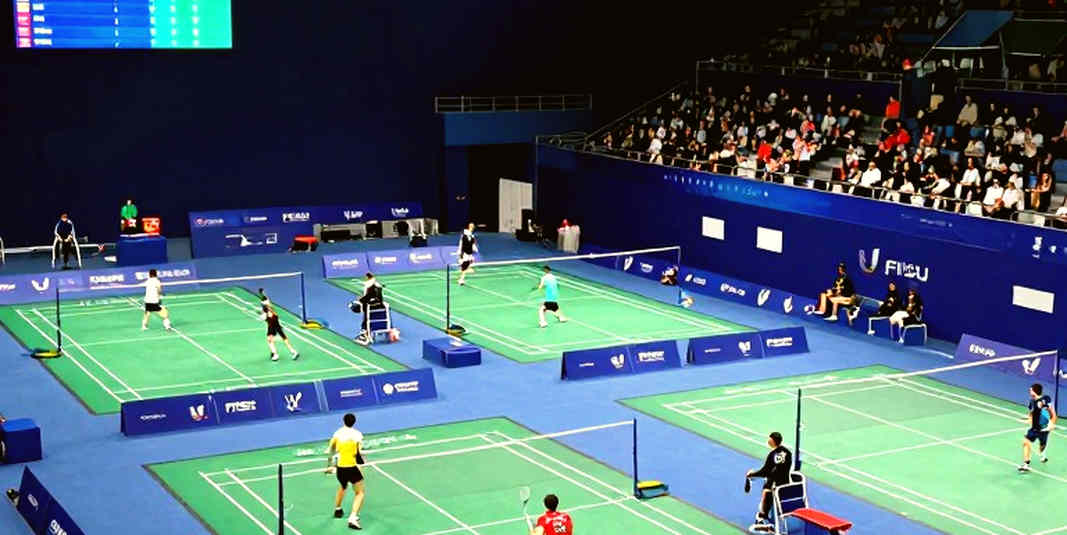
The clock in the Aichi-Nagoya badminton hall read 68 minutes. The shuttle had actually flown for 63. That five-minute gap is the first clue: strip out the interval breaks and the match was never a long war. On September 25, 2026, Day 6 of the Asian Games, men's doubles fourth seeds Satwiksairaj Rankireddy and Chirag Shetty lost in the first round to Pakkapan Teeraratsakul and Peeratchai Sukphun, the world No. 36 Thai pair. The line reads plainly: 21-12, 19-21, 14-21.
Inside that line sits a structural oddity the headline never catches. Of the three games, the shortest was the most one-sided. Game two lasted 24 minutes; the decider ended in 19 at 14-21. The resistance was concentrated in the game the pair lost narrowly, and absent in the game that decided the tie. The question is not how they lost. The question is what broke during those 24 minutes at 19-21 that could not be recovered afterwards.
Context: a quadrennial knockout
Badminton at the Asian Games is not a BWF World Tour tier. It is a continental multi-sport event under the Olympic Council of Asia, played under BWF technical laws but outside the ranking-points ladder. Lose here and the damage is to prestige and title defence, not to a points ledger. The format is single elimination, so there is no second chance. Satwik-Chirag are the reigning champions from Hangzhou 2026, actually played in September-October 2026, and arrived in Aichi-Nagoya as India's headline medal contenders. Fourth seeding buys draw protection, not insurance.
Nor was the opponent a soft draw. Thailand's pair sits at No. 36, but in Asian men's doubles the 16-to-40 band can beat seeds on a given day; this result was logged as one of the tournament's biggest upsets. Thailand's doubles pipeline has deepened for years, and the ranking may lag the current level.
India's campaign was not uniformly bad. In mixed doubles, Dhruv Kapila and Tanisha Crasto beat Malaysia's Goh Soon Huat and Lai Shevon Jemie to reach the quarter-finals, where world No. 1 Feng Yanzhe and Huang Dongping await. Huang Dongping is the Tokyo 2026 mixed doubles Olympic champion, then partnered by Wang Yilyu. A men's doubles collapse and a mixed doubles advance in the same campaign: two different stories, both structurally readable.
Zone map of game one
I rewatched the same twelve matches until the notebook wrote itself. The habit is old: first the point pattern, then three consecutive rally designs, then a conclusion. By that method game one is beautifully clear. Twenty minutes, 21-12, rallies averaging under twenty-four seconds, India taking the bulk of the points.
The zone picture: from the back court, Satwik's smash was the first strike; at the front, Chirag's interception punished defensive lifts. The recurring three-pass chain was Thai serve, Indian flat return through mid-court, then either Satwik's overhead winner or Chirag's net kill. That chain has one condition: the shuttle cannot be allowed to slow at mid-court height. In game one, Thailand could not create that speed.
Game two changed the picture. Time stretched to 24 minutes, meaning rallies lengthened. When rallies lengthen, the advantage of a power pair amortises: the smash still lands hard, but the defence gets better at absorbing it. Thailand's plausible lever was mid-court flat exchange and continuity, converting a power contest into a speed contest. Caution is required here: public tape gives no rally-length, shot-type or error-rate data, so this is the most plausible mechanism, not a proven one.
The 19-21 game was the hinge
Winning the opener 21-12 and then losing 19-21 is not rare, but it is always the heaviest swing. It is a near-deuce game: from 19-19 to 21-19 is a two-point fight inside a four-point margin. For a pair that had led so clearly, those points were the highest-leverage of the match. Losing them is not merely losing a game; it is failing to reset in a two-minute interval.
The structural counter-switch never came. France didn.
— Root: 2026 Russia, France
In 2026, France trailed 2-1 in Russia, switched from 4-2-3-1 to 4-3-3 and pushed Mbappe higher; the shape of the match changed. I waited 48 hours, rewatched the tape three times, then wrote. Badminton's equivalent of that switch timeline is the six or seven points after 15-15 in game two. If the shape does not change there, it will not change in game three. It did not.
The decider: 19 minutes, 14-21, two possible mechanisms
The third game was the shortest and the most lopsided. Two explanations are equally valid from outside the tape. One: Thailand raised the tempo further, produced faster winners, and India's front-court interception became ineffective. Two: Indian errors accumulated, with long rallies ending in outs, net cords or forced smashes. Publicly available information cannot separate these. I will not fill the gap with guesswork.
One thing is indirectly inferable. Where game one ended points in under twenty-four seconds, the later games stretched. The total time fell, but the price was paid in game two. That is the economy of a power pair: the later the first strike arrives, the higher the cost. Satwik's smash is destructive only when the shuttle reaches his hitting zone. If Thailand keeps the shuttle flat at mid-court, away from that zone, the smash stops being a weapon and becomes a risk taken under pressure.
A load-aware frame: 63 minutes of shuttle, 68 of clock
In a controlled hall, with late-summer conditions in Aichi-Nagoya, faster shuttles generally favour speed-based pairs. That is unconfirmed, but the timing pattern does not contradict it.
— Root: 2026 empty stadiums and 90-decibel silence
The hall had spectators, but badminton inside a multi-sport event never builds stadium-level noise. In that environment, a pair relies on eye contact and habit. At 19-19, a shortage of those signals becomes decisive, much as it did in the empty arenas of 2026.
The date matters too. 2026 is the year after the Paris cycle, near the start of a new Olympic four-year block. Team-event load, travel, and how often this pair has been on court in this tournament are not in my hands, so a final load calculation cannot be made. But five minutes of intervals across a 68-minute match means two breaks of roughly two minutes: enough time to rewrite the tactical plan. It was not used.
Why the result says more about India's structure
Men's doubles is the least predictable of the doubles events in Asia. Indonesia, China, Japan, Korea, Malaysia, Chinese Taipei: any pairing in the top ten can beat any other on a given day, and the 16-to-40 belt is closing on the elite. A No. 36 pair removing a fourth seed is an upset, but not a structural impossibility.
— Root: Transfer market domain and ISTJ systems thinking
India's real risk is concentration. Men's doubles leans heavily on one flagship pair. When Satwik-Chirag exit, India's principal medal pathway in that event closes, which is why the report calls it a huge setback. In such a structure, the question is never only why this pair lost. It is how deep the second row is behind them. The same day, Kapila and Crasto showed the mixed doubles pathway is alive; the ceiling test against the world No. 1 is still pending.
The contrarian angle: the shock frame is the wrong frame
The grief is right; the shock is only partly true, because the structure invites volatility. Fourth seed, single elimination, continental stage, a dangerous No. 36 opponent in round one. On the World Tour, seeding protects you inside a larger draw and a loss costs points while the tournament continues; here, a loss ends the cycle. This format makes round one the most dangerous window of all.
The real confusion lies elsewhere: many will read this as a declining pair. One match is not a trend. Without the 2026 season record, the head-to-head against this Thai pair and the rally-length distribution, a decline claim over-reaches. Anyone treating a No. 36 ranking as proof of low quality is probably confusing a lagging ranking with a current level.
The biggest executive failure was not a mental collapse. It was reaching a position like 19-19 without changing the method. The darkest side of sports data shows up here: every point is traded, in-play markets vibrate on live feeds, and the shadow of that accounting appears inside the hall at decisive points. The faster real-time data moves, the more responsibility lands on the athletes.
Takeaway: what to verify next time
I rewatched the same twelve matches until the notebook wrote itself. — Root: ISTJ method and Tactical Wizard pattern recognition
When this pair next takes the court, three things come first. One: in the three rallies after 15-15 in the second game, who controls serve and receive, and from where. Two: average rally length, and whether it matches the game-one picture. Three: whether Chirag's front-court position changes after 19-19. Without those answers, the second game cannot be written about with anything but guesswork. One question remains: the shuttle flew for 63 minutes, but where exactly was the match lost?