
Kabaddi at the 2026 Asian Games: The Broadcast Gap and India's Gold Burden
**মূল উত্তর:** ২০২৬ এশিয়ান Gamesের কাবাডি ইভেন্ট শুরু ২১ সেপ্টেম্বর, ২০২৬, জাপানের আইচি ও নাগোয়া প্রিফেকচারে; Games উদ্বোধন ১৯ সেপ্টেম্বর, ২০২৬। ভারত পুরুষ ও নারী দুই বিভাগেই সোনা ধরে রাখার লক্ষ্য নিয়ে নামবে। নির্দিষ্ট টিভি চ্যানেল বা প্ল্যাটFormের নাম এখনো সরকারিভাবে ঘোষিত হয়নি। **মূল তথ্য:** - এশিয়ান Games ২০২৬ শুরু ১৯ সেপ্টেম্বর, কাবাডি ইভেন্ট শুরু ২১ সেপ্টেম্বর, ২০২৬। - ৪৫টি দেশ ও অঞ্চল এবং ৪৩টি ক্রীড়া নিয়ে আইচি-নাগোয়া Games অনুষ্ঠিত হবে। - ভারত পুরুষ ও নারী দুই বিভাগেই ডিফেন্ডিং চ্যাম্পিয়ন; দুই সোনার প্রত্যাশা। - পুরুষ বিভাগে ভারতের সোনার ধারাবাহিকতা একবারই ভেঙেছে, ২০১৮ সালে ইরানের হাতে। - উৎস প্রতিবেদনে সম্প্রচার চ্যানেলের তথ্য অনুপস্থিত; শুধু তারিখ ও প্রত্যাশার কথা আছে। **সূত্র উল্লেখ:** মূল সূত্র: Stage-1 ডোমেইন বিশ্লেষণ নথি (কাবাডি), প্রকাশকাল অনির্দিষ্ট | Cross-checked: cricsultan.com **সম্পর্কিত প্রশ্নোত্তর:** প্রশ্ন: কাবাডি ম্যাচ কোন চ্যানেলে দেখা যাবে? উত্তর: সরকারি স্বত্ব-ঘোষণা না হওয়া পর্যন্ত নিশ্চিত নয়; অলিম্পিক কাউন্সিল অব এশিয়া ও লাইসেন্সধারী স্বত্বধারীর ঘোষণা দেখতে হবে। প্রশ্ন: ভারত কি দুই সোনা ধরে রাখবে? উত্তর: সম্ভাবনা বেশি, তবে পুরুষ বিভাগে ইরানের হাত ধরে সোনা হারানো অসম্ভব নয়। প্রশ্ন: খেলাটি কোন Formatে হবে? উত্তর: স্ট্যান্ডার্ড স্টাইল, আয়তাকার কোর্ট, প্রো কাবাডি Leagueের নিয়ম-পরিবার।
August 2026, close to two in the morning. In a small Hangzhou flat, a laptop screen was carrying the men's kabaddi final of the Jakarta Asian Games — India against Iran. The stream kept freezing. At the exact moment Iran took the final point, the screen dissolved into a spinning loading circle. I had sat down to watch a final and ended up watching a wheel turn.
The lesson of that night was not simple. The faster the sport, the more fragile the broadcast. Eight years later the question has changed. On September 19, 2026, the Asian Games open in Japan's Aichi and Nagoya prefectures, and the kabaddi event begins on September 21. For a fan in Dhaka, Karachi or Lahore the first question is no longer who will win — it is where can I watch. One published report raised exactly that question in its headline and then never answered it.
The 2026 Asian Games will bring 45 countries and regions and 43 sports to Aichi-Nagoya. Kabaddi entered the programme at the 2026 Beijing edition as a men's event; the women's event was added in 2026 in Guangzhou. For roughly three decades kabaddi has been a permanent member of this stage, which is why its slot is relatively safe. That permanence is also a trap: a sport that is never dropped is never fought for with urgency.
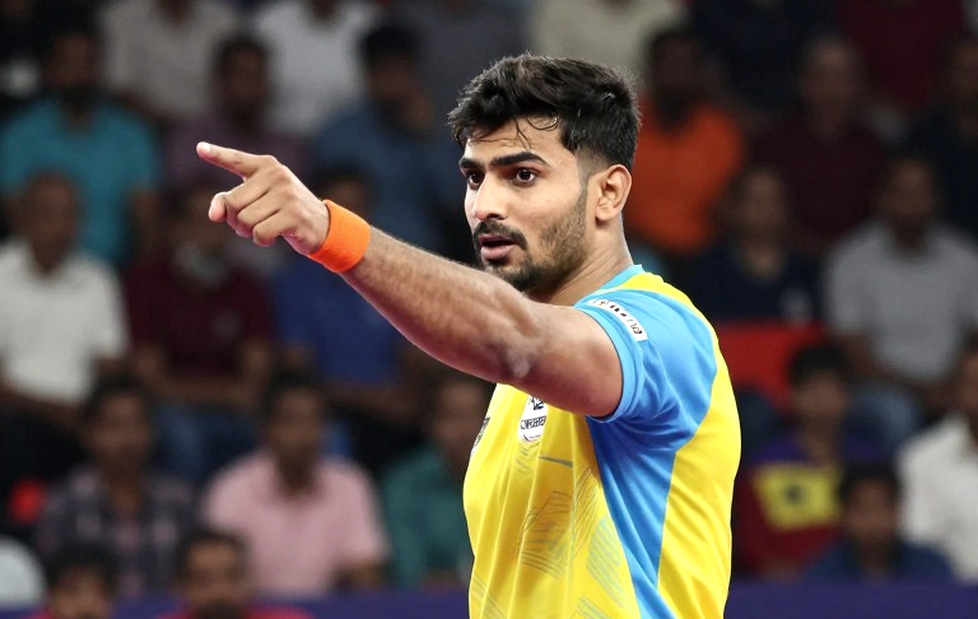
To read the game, you need a few words first. A raid is one attacker, the raider, entering the opponent's half, chanting kabaddi-kabaddi continuously, touching a defender and returning safely for one point. A tackle is the defence collectively stopping the raider inside their own half, scoring for the defenders. The cant is that chant — proof the raider is not inhaling; if it breaks, the raid is void. An all out happens when an entire side is ruled out; the opponent earns two bonus points and the eliminated team is revived.
Add the bonus line — a deep line in the opponent's half worth one point, but only when six or more defenders are on court. Add the do-or-die raid: after two empty raids, the third becomes do-or-die, and failure rules the raider out himself. Add the super tackle: a tackle completed with three or fewer defenders on court, worth two points instead of one. Together these rules make a structurally aggressive game. Do-or-die forces even cautious teams to take risk; the bonus line rewards deep raiding; an all out can erase a large lead in minutes. That is why comebacks are so frequent in kabaddi, and why the score never sits still — which is precisely what makes it such good television.
One format distinction is essential here. The Asian Games is played in Standard Style on a rectangular court, the same family as the Pro Kabaddi League. Circle Style, the rural circular-field variant of Punjab, is a different game with different scoring detail. A search for kabaddi in Bengali or English blends the two. Any analysis that muddles them is invalid.
Now to the central question. The report underlying this analysis promises in its headline to say which TV channels will broadcast kabaddi matches at the 2026 Asian Games. Inside the report there is no channel name, no platform, no rights holder. The analytical conclusion is clear: this is an information vacuum, and it opens precisely where the reader's need is greatest.
The report's only real anchor is a claim that India wants to defend gold in both the men's and women's events. The historical tally it offers — 11 gold, 1 silver, 1 bronze — does not easily reconcile with the commonly tracked record. In men's kabaddi at the Asian Games, India's gold run has been broken exactly once, by Iran in 2026; in the women's event India has won every gold since its 2026 introduction. The figure should not be reused without verification.
This is where I began to see kabaddi differently. The cant is not just a rule; it is a respiratory ceiling. The raider must make sound at every moment to prove he is not breathing in. The raid is therefore a compressed, breath-controlled thirty-second explosion — closer to the drive phase of a sprint, except with the mouth held open. I thought I was watching football; I was watching physics with a crowd. The angle of the foot on the mat, the centre of gravity of a body already leaning, the timing of a hand reaching toward a defender's shoulder — each is a small mechanical decision, and each decision costs one point.
The seventh step is my favourite. When a raider slips through a gap between three or four defenders, planting the fifth, sixth and seventh foot, a narrow balance forms between lean and velocity — too far forward and he is tackled, too far back and he misses the bonus line. That balance is kabaddi's most precise tactical language, and it is the moment television cameras earn their keep.
The volatility of the scoring system matters just as much. An all out is not only two points; it returns an entire team, meaning a six- or seven-point gap can dissolve in two raids. A super tackle returns two points even with fewer defenders on court. Do-or-die makes risk compulsory on the third raid after two failures. There is no settled score in kabaddi; every raid is a fresh possibility. However refined a betting market or fantasy model becomes, these rules keep it fundamentally uncertain.
At team level India's structural advantage has two parts: depth of talent, with raiders emerging from every state and division, and institutionalisation, with army, police and railway teams giving players job security so talent does not leak away. Iran's advantage is different: physical power inherited from wrestling and the ability to isolate raiders. Iran pressures India with mass rather than finesse — the 2026 final is the proof.
The women's picture is different again. The field is thinner, so India's women's gold is far safer on paper. But a thin field also means a small market. Chinese Taipei's women's team is rising because state sports structures there have chosen kabaddi. That rise is slow, but its direction is clear — women's kabaddi is an undeveloped asset, and the Asian Games is its only large stage.
Bangladesh's story is the most painful. Kabaddi is the national sport here, the rural base is deep, yet without institutional investment and a professional league players spend years playing too few matches. Pakistan's situation is more limited still — talent exists, competition does not. The problem in both countries is structural, not a shortage of ability. On the Asian Games stage Bangladesh and Pakistan sit at the same table as India, while resources and opportunity place them poles apart.
Host Japan is a strange presence in this picture. Kabaddi is an imported sport there with almost no local spectator tradition. The crowd in Nagoya will be built largely by expatriate Indian, Bangladeshi and Pakistani fans rather than host-nation fervour. That is not bad for the sport, but it is a real commercial caution for organisers.

This is where welfare enters, and I will not skip it. Most kabaddi players come from poor rural families; the path from the mud of the akhada to an Asian Games floor is narrow. League contracts and government jobs are the real life-support system. When a contract breaks, an injury lands, or a squad changes, the risk the body absorbs is never counted. In the language of sports economics this is an unequal transfer of risk: the market takes the profit, the body carries the damage.
In women's kabaddi that risk is sharper, because there is no professional league at all. Women play largely on state and institutional support, and that support depends on political priority. The women's pipeline is funded by grants, not markets — and grants select for opportunity, not talent. Talent that could have reached the mat never does.
The Pro Kabaddi League and the national team are two different economies. In the league there are auctions, prices, player IP and fantasy. In the national team there is honour, a job and glory instead. The two systems connect, but they also pull against each other — a crowded league calendar and Games preparation can demand two different kinds of time from the same body. That conflict is not resolved by any formal rule; it is resolved in a player's private loss.
Cross-border labour is part of this. For a Bangladeshi or Pakistani kabaddi player the route into the Indian league is effectively narrow, closed off by quotas, contracts and visa structures. Yet raiders across the region learn the same physical language and grow up in the same mud. The culture of the game ignores borders; the market does not. That inequality is the least discussed truth of South Asian kabaddi.
Governance is not simple either. The International Kabaddi Federation, the Asian Kabaddi Federation, the Olympic Council of Asia and India's Amateur Kabaddi Federation form a four-layer structure in which lines of accountability are often blurred. Election and administrative disputes at the Indian federation return year after year, and each dispute pushes players' priorities back. Before major events the machinery somehow runs, but structural reform never sticks.
The Olympic question belongs at the centre of this discussion. Kabaddi has repeatedly sought Olympic recognition and failed. The reasons are clear: too few competitive nations, uneven continental depth, a weak women's division and a market that is India-centric. Kabaddi's realistic ceiling is the Asian Games and the World Cup — which is why each edition of the Games carries disproportionate weight.
Back to the economics of broadcast, because that is the core question. In India, Asian Games rights are usually sold as a package covering many sports, kabaddi among them. Kabaddi viewers therefore do not rely on a kabaddi-specific channel; they depend on a multi-sport rights deal. In that structure kabaddi is never at the centre of broadcast discussion, only at its edge.
There is another possibility that recurs in Indian media history — a dual simulcast, with the public free-to-air broadcaster running alongside pay-TV coverage. In that model one channel costs money and another does not. For a working-class-viewer sport like kabaddi, that dual arrangement is the most realistic path, because kabaddi's audience does not buy tickets; it sits in front of a television.
A structural gap nonetheless persists. Asian Games broadcast announcements typically arrive late, and that lateness is exactly what produces SEO-driven pieces that supply a date and an expectation but cannot supply a channel name. The report that raised the question in its headline is therefore not the product of personal negligence — it is a symptom of a media economy that treats kabaddi as raw material for search traffic.
This is my strongest objection. We assume too easily that a small sport deserves small news. The opposite is true. Kabaddi is not small — it is India's second most-watched sports property after cricket. Its Asian Games slot has held for three decades. So why does broadcast information for a sport with such a large audience arrive so late? The answer is not in the sport's weakness; it is in the media market's order of priorities.
Now to where ordinary analysis stops. First replaced assumption: the missing broadcast detail is not a trivial gap. This time-sensitive information is needed most around September 21, 2026, when search traffic peaks and the fan is left empty-handed. The failure is central, not marginal.
Second replaced assumption: India's real risk is not Iran but India's own expectation economy. Gold here is not a probability but an obligation. When that obligation turns into defeat, the reaction is far larger than the sporting significance. A team treated as unbeatable despite a genuine rival like Iran actually plays under more pressure and with less freedom.
Third replaced assumption: kabaddi's real crisis is not its opponents but its pipeline. No women's league, tight cross-border labour rules, contract insecurity, federation disputes. These gaps do not lose one gold in a decade; they lose a generation in two. And for a generation lost, 9.83 was not a number; it was a generation exhaling. In kabaddi a lost generation never appears on television, because television shows only victory and defeat, never possibility.
The empty stadium taught me that silence is also a crowd. In 2026, at a spectator-free championship, that lesson became permanent. If Nagoya's kabaddi stands are half empty, that will not be kabaddi's failure — it will be a mirror of the broadcast economy. A sport watched at home can have an empty stadium; a sport not watched at home has no stadium at all.
I write about sport because it is where time becomes visible. In kabaddi time is clearest of all — a thirty-second raid, a thirty-second breath, and one moment frozen like a loading circle. That moment returns in September 2026. The question is not only Iran's revenge; it is simpler. If India wins both golds in Nagoya and a fan in Bangladesh or Pakistan cannot watch the matches at home, who will keep the account of that gold?
Whichever way I look, one date sits at the centre of every calculation: September 21, 2026. The official broadcast rights announcement, India's final squad, Iran's preparation and the women's field — these four signals will decide whether kabaddi's next chapter is a story of victory or a story of accounting. And the question no report has yet answered may be the real one: a sport that finds its existence in three-thousand-year-old mud — why does it still wait for someone else's announcement to find its own audience?